




In India, the concept of Lateral Entry for Working Professional Program has been gaining momentum in recent years. Work-integrated learning, also known as experiential learning, is an educational model that combines classroom learning with practical work experience. It allows students to gain real-world experience while they are still studying, thereby preparing them for a successful career in their chosen field.
Lateral Entry for WILP degree Program are becoming increasingly popular in India because they offer several benefits to students, educational institutions, and employers. In this article, we will discuss the advantages of Lateral Entry for Working Professional Program, the challenges faced by educational institutions in implementing them, and how they can be addressed.
Lateral Entry for Working Professional Program provide students with the opportunity to gain practical experience in their chosen field. This experience helps them understand the real-world challenges they will face and prepares them to handle them effectively. Students get to apply the theoretical knowledge they have acquired in the classroom in practical settings, which enhances their understanding of the subject matter.
Lateral Entry for Working Professional Program make students more employable by providing them with valuable work experience. Employers often prefer candidates with practical experience, and students who have completed work-integrated learning programs have a better chance of getting hired.
Students who participate in Lateral Entry for Working Professional Program often perform better academically than those who don't. The practical experience gained through these programs helps students understand the relevance of the theoretical knowledge they acquire in the classroom, which motivates them to study harder.
Lateral Entry for Working Professional Program help students develop a range of skills, including problem-solving, critical thinking, communication, and teamwork. These skills are highly valued by employers, and students who possess them have a better chance of succeeding in their careers.
Industry connections: Lateral Entry for Working Professional Programï provide students with the opportunity to network with industry professionals, which can help them find job opportunities and build their professional network.
Despite the numerous benefits of Lateral Entry for Working Professional Program, educational institutions in India face several challenges in implementing them. Some of these challenges include:
Lack of resources: Lateral Entry for Working Professional Programs require significant resources, including funding, staff, and infrastructure. Many educational institutions in India struggle to provide these resources, which makes it difficult for them to implement these programs effectively.
Lateral Entry for Working Professional Programs require partnerships with industry partners to provide students with practical work experience. However, many educational institutions in India struggle to establish these partnerships , which limits their ability to offer such programs. Resistance to change: Some educational institutions in India are resistant to change and prefer traditional teaching methods. They may not see the value in Lateral Entry for Working Professional Program or may not be willing to invest the resources necessary to implement them.
To address the challenges faced by educational institutions in implementing Lateral Entry for Working Professional Programs, several steps can be taken. These include: Government support: The Indian government can provide funding and support for educational institutions to implement Lateral Entry for Working Professional Programs. This support can help institutions overcome financial and resource constraints and enable them to provide these programs to students.
Educational institutions can establish partnerships with industry partners to provide students with practical work experience. These partnerships can also help institutions gain access to industry experts who can provide valuable insights and guidance. Faculty development: Educational institutions can provide training and development opportunities to faculty members to help them understand the value of Lateral Entry for Working Professional Programs and how to implement them effectively.
Educational institutions can encourage students to participate in Lateral Entry for Working Professional Programs by promoting the benefits of these programs and providing them with guidance and support throughout the process.





Flexible payment option wherein students can pay their fee in easy installments.
Please fill the form to know the fee structure for international students
Student friendly finance scheme wherein you can pay your college fee in no-cost EMIs.
Accomplish your academic ambitions through our encouraging scholarship programme.
















Work Integrated Learning Program (WILP) at Mangalayatan University is designed to help working professionals enhance their career trajectory by acquiring professional qualifications and strengthening their technical skills while continuing their employment.
WILP courses are structured to allow working professionals to pursue higher education alongside their jobs, enabling them to upgrade their qualifications without interrupting their employment.
Eligibility for WILP depends on the program. Candidates with ITI or 12th (PCM) with a minimum of 45% marks are eligible for Diploma in Engineering. Diploma in Engineering or BSc (PCM) with at least 45% marks is required for B.Tech, while a B.Tech degree with a minimum of 45% marks is needed for M.Tech programs.
Yes, a WILP degree is equivalent to a regular on-campus degree in India and provides the same academic value while allowing learners to continue their professional commitments.
Yes, WILP programs are specifically designed for working professionals and allow learners to pursue their education while working full-time.
The duration varies by program. The B.Tech program generally has a duration of three years, while the M.Tech program is completed over two years.
Yes, Mangalayatan University offers lateral entry options for working professionals under the WILP framework.
Online evening courses are conducted in the evening hours through online mode, making it easier for WILP learners to attend classes alongside their work schedules.
Yes, part-time degrees offered under WILP are recognized by employers as well as higher education institutions.
Work Integrated Programs combine academic learning with practical work experience, helping professionals build industry-relevant skills, enhance employability, and gain a competitive edge in the job market.
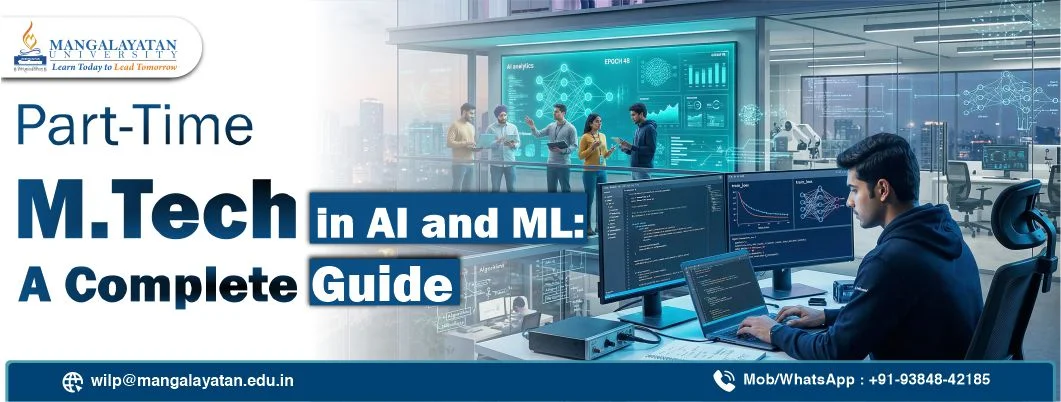
Part-time M.Tech in AI and ML Engineering: A Complete Guide...
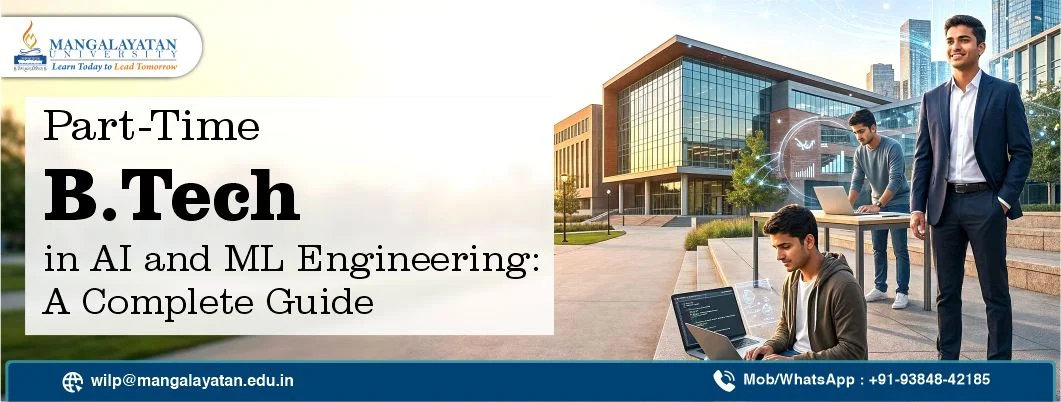
Part-time B.Tech in AI and ML Engineering: A Complete Guide...

WILP (Work Integrated Learning Program): Smart Choice for...
B.Tech CSE (Flexible Timing) vs Online BCA – Which Course Is...